
Construction Web Design
Websites for building firms and contractors that show your projects, prove you are safe to hire and bring in the bigger jobs. Designed by Ben, from £39 a month.
 Rated “Excellent” on Trustpilot & Google
From £39a month
No setup fee · yours after 12 months
- Project galleries and case studies
- Your accreditations and policies on show
- Quote form that takes photos and plans
- Hosting, email, security and updates included
Plans start with 12 months, then carry on month to month at the same price. Cancel with 30 days’ notice.
Your website is checked before you are asked to price
Before a homeowner trusts you with an extension, or a facilities manager puts you on a tender list, they look you up. They want to see work like theirs, proof that you are insured and accredited, and a firm that looks settled. If your website is out of date, or you only have a Facebook page, you can lose the job before anyone rings.
A good construction website does that checking for them. It shows the projects you are proud of, the sectors you know, the schemes you belong to and who to call. The right people get in touch, and they arrive already half sold.
Goldin Construction is a good example. It refits, fits out and extends buildings for businesses, and its website sets out each service, the sectors it works in, the clients it has worked for and its accreditations.
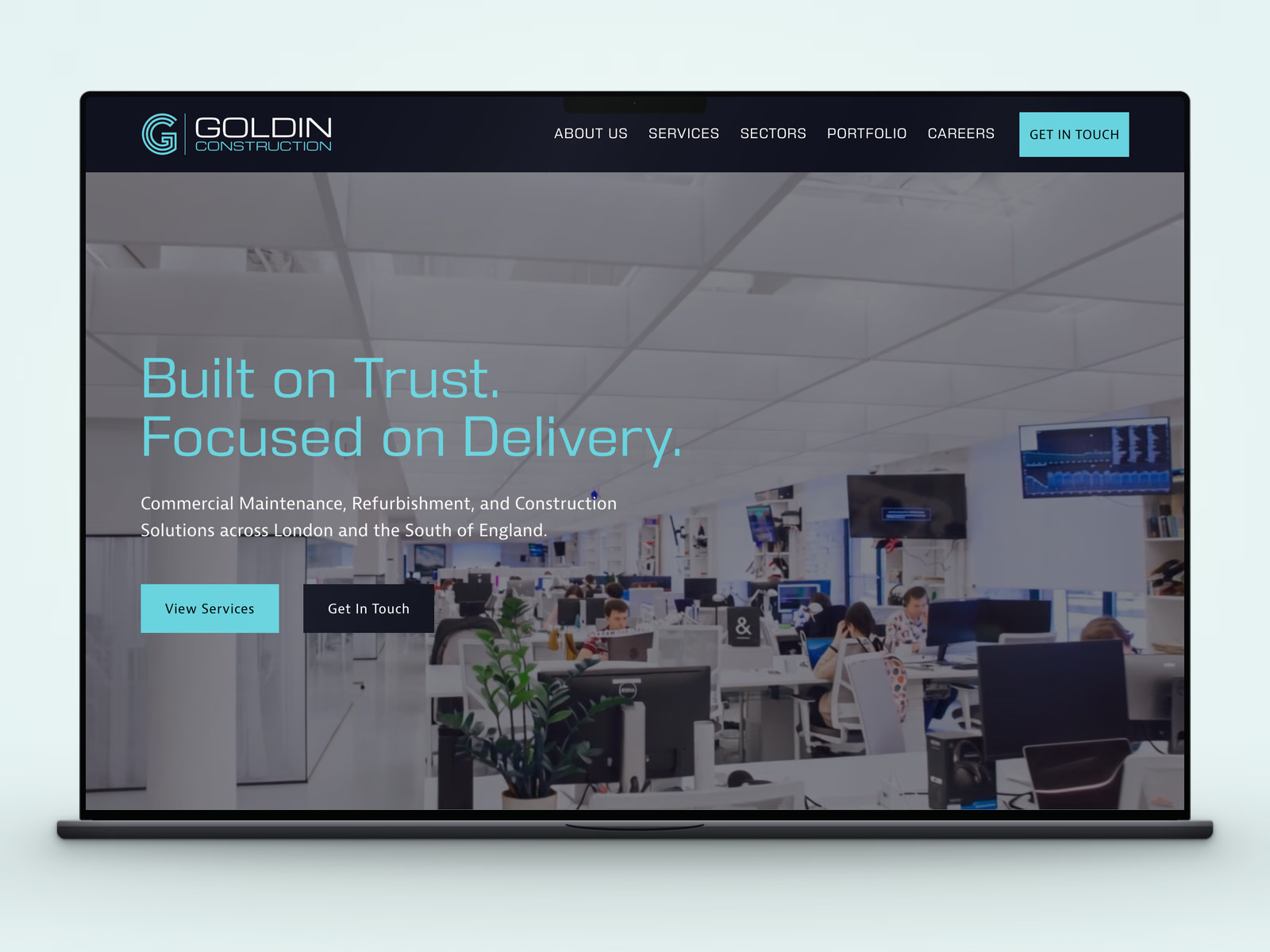
Goldin Construction, a commercial builder, is on our £89 a month Premium plan.
What a construction website needs
These are the parts that win work for a building firm. We plan every construction website around them.
A project gallery
Big, sharp photos of finished work, grouped by type of job. Before and after shots and progress photos show how you work, not just how it ended.
Case studies that sell
A page for your best jobs: the client, the brief, the budget band, the timescale and how it went. This is what bigger clients read most closely.
Accreditations up front
CHAS, Constructionline, SafeContractor, TrustMark, FMB and the rest, with logos and member numbers where people look before they get in touch.
A page for each service
Extensions, new builds, refurbishments, groundworks or fit-outs each get their own page. Each one can rank on its own and answer the job someone is searching for.
The areas you build in
Name the towns and counties you cover. Location pages help you show up when someone searches for a builder in their area.
A quote form for real jobs
People can send photos, drawings and plans with their enquiry, plus a rough budget and start date. You can judge the job before you call back.
Reviews and client names
Google reviews on the pages people read, plus the names of the businesses you have worked for. Both build trust fast.
Easy to call from site
Your number is a tap-to-call button on every page. Most visitors are on a phone, and some are standing in the room they want rebuilt.
Set up for Google
Titles, descriptions and schema on every page, plus Google Analytics and Search Console, so Google knows what you build and where.
Win tenders and bigger jobs
Main contractors, councils, schools and property managers all check suppliers online. They are not looking for a sales pitch. They are looking for evidence. Here is what we put in front of them.
Your schemes and standards
Constructionline, CHAS or SafeContractor, plus any ISO 9001, 14001 or 45001 certificates. Buyers can tick you off their list without chasing you.
Policies they can download
Health and safety, quality and environmental policies as PDFs. It saves you sending the same documents for every pre-qualification form.
The people behind the work
Your directors, site managers and team, with the cards and training that matter, such as CSCS and SMSTS. Buyers want to know who will be on site.
The sectors you know
Education, healthcare, retail, offices or housing. A page for each sector shows the work you have done there and the rules you work to.
Case studies with numbers
Contract value bands, timescales and what made the job hard. Numbers show you can deliver at the size of job they are tendering.
Insurance and company details
Your company number, VAT number, address and insurance cover, set out plainly. It shows you are a firm with roots, not a phone number.
Working mostly for homeowners? The same proof works on the doorstep. TrustMark, FMB membership, warranty details and a few local case studies give a family the confidence to sign for a £60,000 extension.

Websites for every kind of building firm
Each part of the industry wins work in its own way, so each website is planned around the jobs you want more of.
Main contractors
Sector pages, case studies with contract values and a clear route for buyers to request your documents. Built to support tenders and frameworks.
Builders and renovation firms
Pages for extensions, loft conversions and full renovations, a gallery for each, and a quote form that takes plans. TrustMark and FMB badges up front.
Groundworks and civils
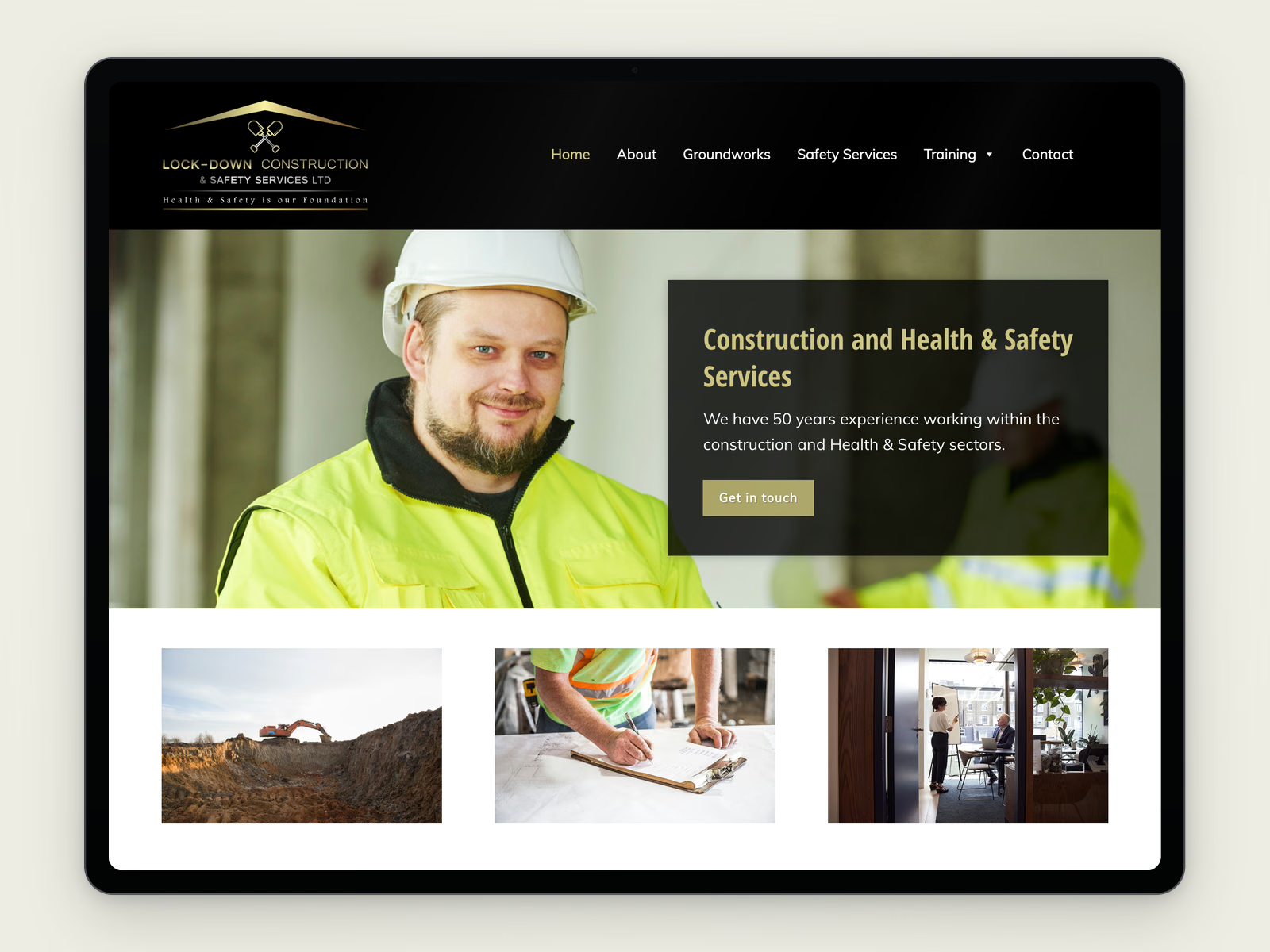
Drainage, foundations, driveways and site clearance, each with its own page. Photos of plant and finished sites, and the areas you cover. See Lockdown Construction Services.
Commercial fit-out and refurbishment
Office, retail and hospitality projects shown by sector, with the client names you are allowed to share. See Goldin Construction.
Developers and property firms
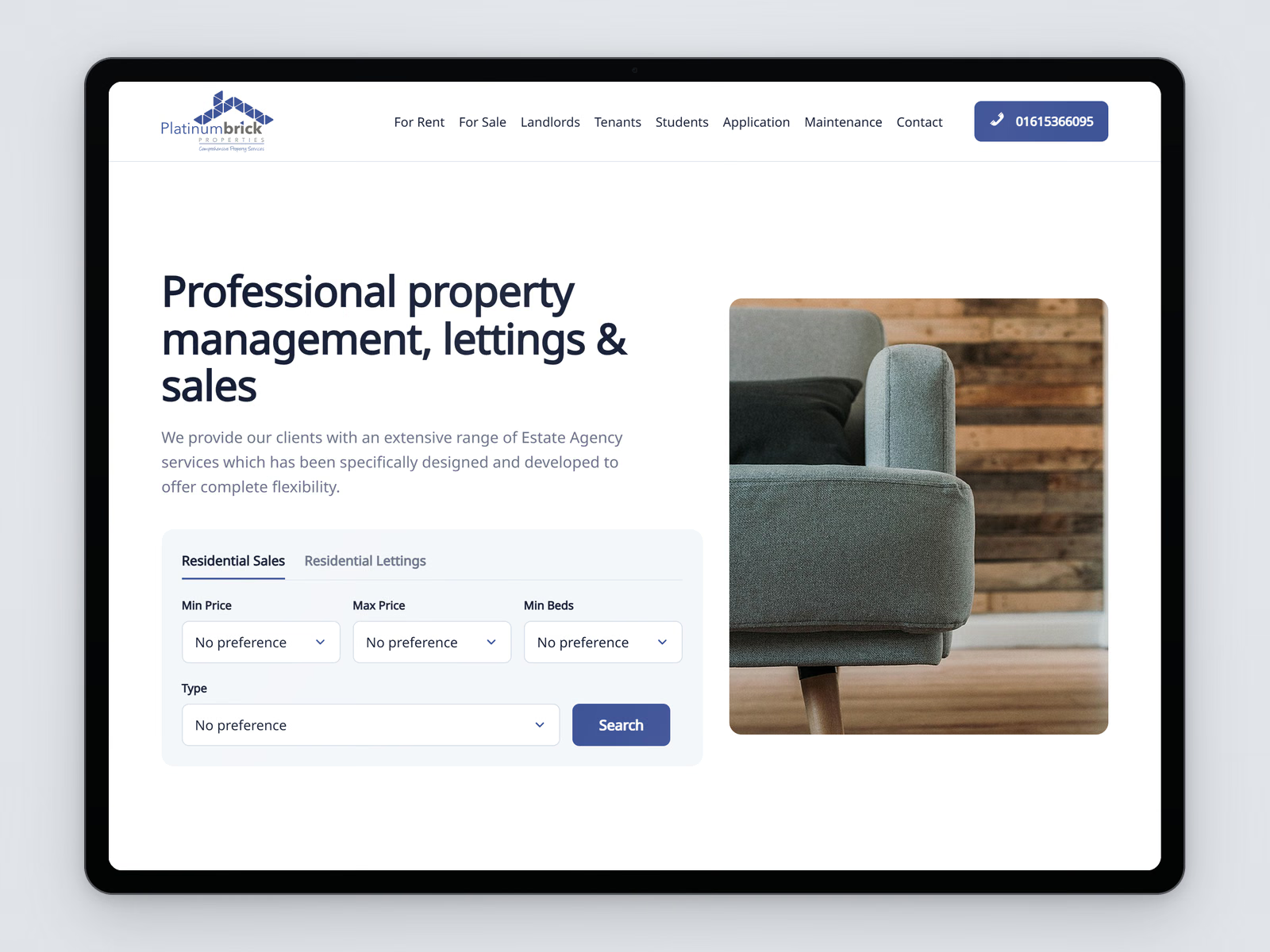
Current and past schemes, plots for sale or let, and a page for landowners and investors. See Platinum Brick Properties.
Scaffolding, roofing and specialists
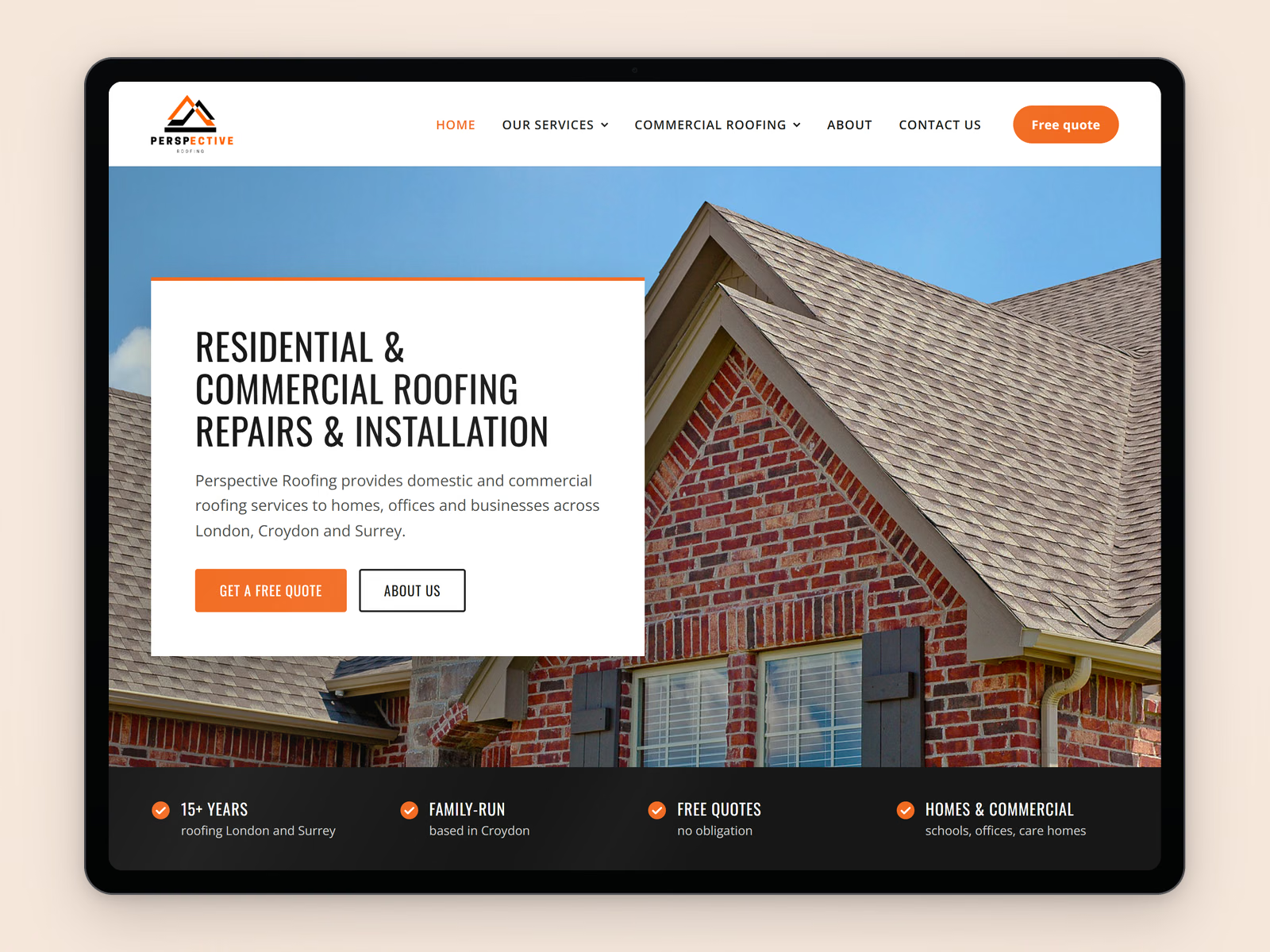
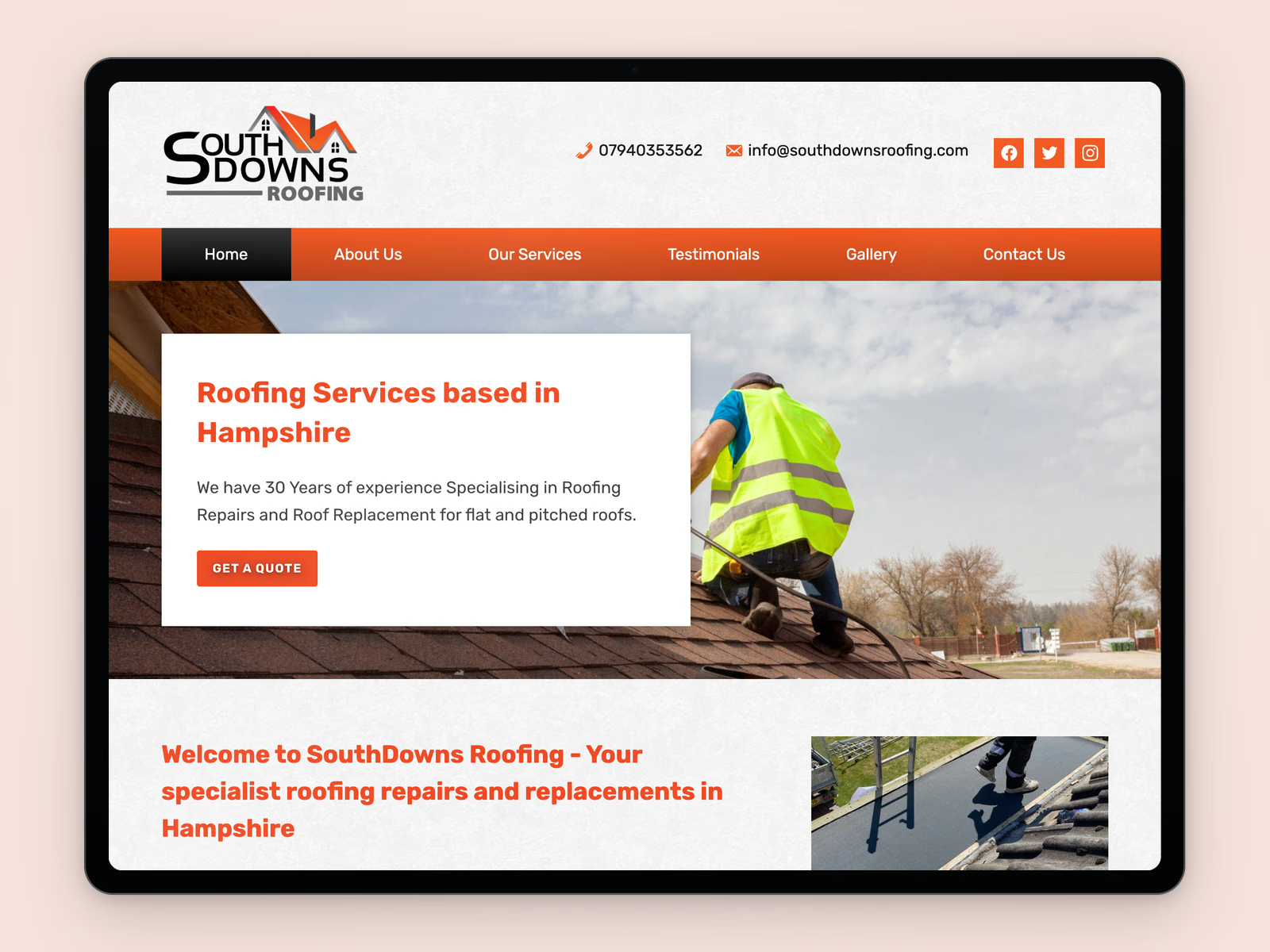
Scaffolders, roofers, steel erectors and other specialist firms that supply main contractors and the public. See Perspective Roofing.
Are you a sole trader, such as a plumber, electrician or plasterer? Our website design for tradesmen is built around getting your phone to ring for day-to-day jobs.
Getting found for building work in your area
Most people search with a place name, such as “builders in Brighton” or “extension builder near me”. Showing up for those searches is how a building firm gets enquiries without paying for every lead.
A page for each area
Business includes 5 location pages and Premium includes 15. Each one is written for that place and shows jobs you have done there.
Your Google reviews on the website
On Business and Premium, your Google reviews show on your pages and update on their own. You need a Google Business Profile.
Built to be understood by Google
Proper titles, descriptions and schema on every page. Premium uses Rank Math Pro and brings every page to a score of 90 or more.
Want more help with rankings? Our Local SEO plans work on your Google Business Profile, listings and rankings month by month.
UbieMAX: built to load fast on a phone
Google scores how fast a page loads with a free tool called PageSpeed Insights. A slow page loses visitors, and speed is one of the things Google looks at when it ranks pages. That matters even more on a building site with one bar of signal.
UbieMAX is our speed work, included on the Business and Premium plans. We tune the hosting, images, code and caching so your pages load fast.
We would rather show you than promise you. These are real scores we measured on 21 October 2026. Not every website we look after reaches 90 on mobile yet. Big photo galleries, sliders and extra plugins all slow a page down, and it takes work to keep a website quick. You can test any website yourself with the same free tool.
| Website | Mobile | Desktop |
|---|---|---|
| Ubie Websitesubiewebsites.co.uk, this website | 98 | 100 |
| Perspective Roofingperspectiveroofing.co.uk, roofer, Business plan | 98 | 100 |
Performance scores out of 100 from pagespeed.web.dev, 21 October 2026. Mobile is the harder test, because it acts like a mid-range phone on a slow connection.
Construction website prices
Three plans, one monthly price each. There is no setup fee on any of them, and the website is yours after 12 months.
*Fair use applies, normally up to 2 hours of updates a month.
Compare the plans in fullSpread the cost, and own it after 12 months
Building firms tend to pay for a website in one of two ways. Here is how they compare.
Pay monthly with Ubie
- Your first payment, from £39, is all you pay to start
- Design, hosting, email, security and updates in one price
- The website is yours after 12 months, built on WordPress
- Changes made for you when you finish a new job
Pay a web agency upfront
- Often £500 to £5,000 before anything goes live
- Hosting, email and changes usually cost extra each year
- Yours from day one
- You often wait for a quote every time you want a change
Once your first 12 months are paid, the design, content, files and database are yours. Your plan then carries on month to month at the same price. If you ever leave, we move the website to you or your new provider.
What building firms say about us
“Ubie are head and shoulders above the competitors”

“Excellent service provided and always on hand to make amendments”

“By far the best web designer I have used”
How it works
Book a free call
Tell Ben what you build, who for and where. He will tell you which plan fits, with no pressure.
Send your photos and paperwork
Project photos, your logo, your accreditations and a few notes on your best jobs. On Business and Premium, Ben writes the pages for you.
Approve it and go live
You check a preview and ask for any changes. Most websites are live in under 2 weeks, and we look after it from then on.
Construction web design questions
- How much does a construction website cost?
With Ubie, £39 a month on Essential, £69 on Business or £89 on Premium, with no setup fee. That covers the design, UK hosting, a business email address, security, backups and updates. Elsewhere in the UK, a web designer or agency usually charges £500 to £5,000 upfront for a construction website, with hosting and changes on top.
- Which plan suits a building firm?
Essential suits a small builder who wants a professional website at the lowest price. Business suits most building firms, with location pages, written content and your Google reviews. Premium suits firms with lots of services, several sectors or a wide area, and anyone tendering for bigger contracts. Goldin Construction is on Premium.
- Can I show my CHAS, Constructionline or TrustMark accreditations?
Yes, and you should. We add the logos and your member numbers near your contact details and quote form, and we can link to your profile on each scheme’s website so buyers can check it. Send us the details and we add them.
- Will a website help us win tenders?
It will not win a tender on its own, but it helps you get on the list. Buyers and main contractors look you up before they invite you to price. Case studies, sector pages, your accreditations and policies you can download make you an easy firm to say yes to.
- Can people send drawings and photos with their enquiry?
Yes. The quote form takes photos, drawings and PDF plans, along with the type of job, a rough budget and a start date. Enquiries go straight to your email, so you can judge the job before you call back.
- How do we add new projects to the gallery?
Send us the photos and a few lines about the job whenever you finish one, and we add it for you. Essential includes one small update a month. Business and Premium include unlimited updates within fair use.
- Will our website show up on Google in the areas we cover?
That is what it is built for. Every page gets proper titles, descriptions and schema, and we set up Google Analytics and Search Console. Business adds 5 location pages and Premium adds 15. Rankings depend on your area and your rivals, so no honest web designer can promise a position.
- How long does it take to build a construction website?
Most websites are live in under 2 weeks. The time depends on how many pages you need and how quickly you send photos and feedback. You check a preview and ask for changes before it goes live.
- We are on site all day. How much of our time will it take?
About an hour in total. A short call, then photos and notes sent from your phone. On Business and Premium we write the words for you, so nobody in the office has to.
- Do we own the website?
Yes, once your first 12 months are paid. The design, content, files and database are yours. It is built on WordPress, so it is not tied to us. If you leave after that, we move it to you or your new provider.
- How long is the contract?
Plans start with 12 months. After that they carry on month to month at the same price, and you can cancel with 30 days’ notice.
- Is there anything else to pay?
No. There is no setup fee, and hosting, email, SSL, security, backups and updates are all in the monthly price. The only extras are add-ons you choose, such as a logo, or an online store on Premium for a one-off £299.
- We already have a website. Can you redesign it?
Yes. We keep your domain name and move it across when the new website goes live, so your email and your Google listing carry on as before. Send us the link and Ben will take a look.
- What is UbieMAX?
UbieMAX is our speed work, included on the Business and Premium plans. We tune the hosting, images, code and caching so your pages load fast on phones, and we check the results with Google PageSpeed Insights.
- Is this the same as your websites for tradesmen?
No. Our websites for tradesmen are built for sole traders who want more day-to-day jobs. This page is for building firms and contractors, where case studies, sectors, accreditations and tenders matter more. The plans and prices are the same.
What a construction website costs in the UK
Here is how £39 a month compares with building it yourself or paying a web designer upfront.
DIY builder and agency figures are typical UK prices, October 2026. Your first year on Essential is 12 months at £39, which is £468.
What to have ready before we start
You do not need a brief. A short call is enough to begin. These things make it quicker.
Photos of your best jobs
Phone photos are fine. Finished work, work in progress and your team on site all help.
A few notes on each project
The client type, what you did, how long it took and anything that made it tricky.
Your accreditations
Logos and member numbers for each scheme, plus any ISO certificates.
Your policies
Health and safety, quality and environmental policies, if you want them on the website.
The areas you cover
Your base and the towns or counties you work in. On Business and Premium these become location pages.
Your domain name
If you already own a web address, we transfer it. If not, we register one for you.
Get a website that wins bigger jobs
No setup fee, so your first monthly payment is all you pay upfront. Book a free 15-minute call, or sign up to a plan today.
Ready to go? Sign up to the Business plan for £69 a month.

Talk to Ben before you decide
I design every website myself, and you'll deal with me from your first call to launch day and after.
Book a free 15-minute call or message me on WhatsApp. I'll answer your questions and help you pick the right plan, with no pressure.